NEW YORK, Jan. 14, 2014 /PRNewswire/
– Deloitte predicts smart glasses, fitness bands and watches, should
sell about 10 million units in 2014, generating $3 billion according to
its Technology, Media and Telecommunications (TMT) Predictions 2014
report released today. Deloitte also predicts that the total global
sales of smartphones, tablets, PCs, TV sets and gaming consoles will
exceed $750 billion in 2014 and then plateau as consumer usage will
continue to converge.
“Our predictions for 2014 touch on a wide
variety of topics, but there is some commonality among them. This can be
seen specifically with mobile devices including tablets, wearables,
phablets and also rugged devices,” said Eric Openshaw, vice chairman,
Deloitte LLP and U.S. technology, media and telecommunications leader.
“These newer technologies allow enterprises and consumers to become more
connected, while opening a wealth of new business and communication
opportunities. Enterprises that can capitalize on these new market
segments will be well positioned for success in 2014 and beyond.”
For more than a decade, Deloitte’s TMT
Predictions have forecasted many of the most influential trends in
technology, media and telecommunications — making them a key source of
market intelligence for businesses in all sectors.
The most significant TMT predictions to impact the marketplace in 2014:
1. Wearables: the eyes have it —
Smart glasses, fitness bands and watches, should sell about 10 million
units in 2014, generating $3 billion. Of these wearable computer form
factors, smart glasses should generate most revenues, from sales of
about four million units at an average selling price (ASP) of $500.
Smart fitness bands should sell four million units, at an ASP of$140;
smart watches should sell about two million units at an ASP of $200.
2. The Converged Living Room: a plateau approaches —
Global sales of smartphones, tablets, PCs, TV sets and videogame
consoles will exceed $750 billion in 2014, up $50 billion from 2013 and
almost double the 2010 total. However, a plateau appears likely: sales
are expected to continue growing, but at a slower rate than over the
past 10 years, with an estimated ceiling of about $800 billion per year.
3. Massive Open Online Courses: the future is bright —
Student registrations in Massive Open Online Courses (MOOCs) will be
double compared to 2012 to over 10 million courses, but the low
completion rates mean that less than 0.2 percent of all courses
completed in 2014 will be MOOCs. The growing awareness of online
education will force educational institutions to increase investment in
this area, drive more acceptance of online education as it becomes
accredited and increase adoption by corporate training groups.
4. eVisits: the 21st century housecall —
There will be 100 million eVisits globally, potentially saving over $5
billion when compared to the cost of in-person doctor visits and
representing growth of 400 percent from 2012 levels.
5. Television measurement: for better and worse —
Measurement of the viewing of domestic television programs is
increasingly reflecting the growth of online viewing thanks to the
introduction of hybrid measurement, which enables the inclusion of
viewing taking place on PCs, tablets and smartphones into overall
viewing numbers, and also includes other data sets, such as set-top box
channel selections and video-on-demand server logs.
6. Phablets are not a Phad, but they may be peaking —
Shipments of phablets, smartphones with 5.0-6.9 inch screens, will
represent a quarter of smartphones sold, or 300 million units. That is
double the 2013 volume, and 10 times 2012 sales. But after initial rapid
consumer success, 2014 may mark a ‘peak phablet’ year, as only a
(sizeable) minority of smartphones users will want to handle such a
large device.
7. The smartphone generation gap: Over 55? There’s no app for that —
Those over 55 years of age will be the age group experiencing the
fastest year-on-year rises in smartphone penetration across developed
markets. Ownership should rise between 45 to 50 percent by year-end,
lower than the approximately 70 percent penetration rate for 18-54 year
olds, but a 25 percent increase from 2013.
8. Rugged devices at $250: reinventing the business case for mobile field force —
The entry price for a ruggedized, connected data device that can be
used by some field force workers, as well as to undertake tasks such as
car rental check-in inspections, inspecting highways or delivering
packages, will fall to $250
BT has begun trialling a new
technology from tech company Neul on machine-to-machine (M2M)
communications using ‘white space’ technology.
These tests involve sending traffic
information to and from moving vehicles via gaps – or ‘white spaces’ –
in the frequencies bands used for digital TV broadcasting.
White space networking could enable up to 50 billion devices to be connected wirelessly to the internet by 2020, say BT.
“The internet of things market has huge
potential, but existing short-range and cellular networking technologies
are unable to meet the requirements of many applications we see,” Mark
Harrop, director of mobile strategy at BT, said. “A networking
technology that can provide deep indoor coverage, last for many years
from a single battery, is simple to use, and comes at the right price
point is essential for realizing the true potential of the internet of
things.”
Bins that ask to be emptied
BT has been conducting these trials
since late last year, but now they are using the new NeulNET system. The
NeulNET system provides two-way, wide area M2M networking that Neul
claims “far outreaches today’s GPRS, 3G, CDMA and LTE WAN solutions”.
The NeulNET system uses an
antenna-equipped base station that can provide wireless coverage in a
radius of up to five kilometers, along with terminal modules that can
run for up to 15 years on two AA batteries and can communicate from deep
within buildings or underground.
The system, delivered by Neul as a
cloud-based managed communication service, can operate in either
licensed or unlicensed spectrum, and across a wide range of frequency
bands.
Neul adds that it expects to announce
further deployments of its NeulNET technology throughout 2014. It says
the system could enable smart-city applications ranging from
waste-disposal bins that “ask to be emptied” to green-belt areas and
farms that are monitored and watered efficiently.
The hackers who got into your computer or smartphone are now taking aim at the Internet of Things.
The
connected toothbrush, sports gear with embedded sensors and smart
refrigerators are just a few of the objects showcasing innovations at
the Consumer Electronics Show.
They are all impressive but
"they're all breachable" said Kevin Haley, director of Symantec Security
Response, while attending the huge high-tech trade show.
"If the
object is connected to the Internet, you will find it, and if it has an
OS (operating system) you can hack it," he told AFP at the Las Vegas
expo.
Haley said the pace of innovation could outstrip the security protecting the devices.
"As we start to bring all this new stuff in our houses, we're going have to take some responsibility," he said.
The
devices displayed the CES show included an array of gear from a
connected basketball to baby clothing which monitors an infant's
breathing and positioning.
And security researchers have shown the
possibility, at least in theory, of hacking into automobile electronics
or medical devices like pacemakers.
Catalin Cosoi, chief security strategist at the firm Bitdefender, said the threat remains mostly theoretical for now.
"I don't think the bad guys have understood the benefits for them of making use of such things yet," he said.
But Cosoi said some new hack in inevitable which could cause people to take notice.
"We're
definitely going to see something happening this year we might see
the first collateral victim, a person being physically harmed," he
added.
The introduction of Internet-enabled door locks at CES
poses the obvious question of whether the devices can be compromised by
hackers.
Alex Colcernian, director of product development at
Unikey, which powers Kwikset remote-control locks, said the technology
includes "military grade encryption" to stay secure.
Leo Herlin of
French-based Medissimo, which introduced a smart pill box, said the
system is "extremely secure" to prevent unwanted intrusions.
One
factor that mitigates the risk is that with billions of objects likely
to be connected, the value to hackers could be limited in most cases:
would a hacker penetrate a refrigerator to steal someone's grocery list?
"You've
got to be smart consumers when you're using a smart device," said Randy
Overton, national product trainer for South Korean giant LG, which
showed off its smart appliances that can communicate by text message
with the owner.
To allay potential concerns, computer chip giant
Intel announced at CES that it would offer its McAfee security service
for connected devices free of charge,.
Intel chief executive Brian
Krzanich told a CES keynote that offering this level of security would
"allow this ecosystem to flourish."
Equipment maker Cisco estimates that 50 billion objects worldwide will be connected by 2020.
"It is impossible to put security software on every object," said Cisco's David Orain.
The
answer is to look and address "abnormal activity" linked to the
connected devices, said Orain, noting that this is part of what Cisco
offers clients.
One of the areas where security concerns are paramount are in industrial applications.
Andreas
Haegele of the France-based digital security firm Gemalto said
electronic tracking has been done for decades for things like shipping
containers and petroleum platforms, and that the security of these
objects is now in focus.
US cybersecurity officials have also
stepped up warnings for hacking into so-called critical infrastructure
like pipelines and power grids.
Symantec's Haley said that last month's publicized hacking into a nanny cam drew headlines but that no real damage was done.
But the same technique could be used for industrial espionage.
"If I can break into the security cameras of my competitor's factory, I can see exactly how the factory works," Haley said.
HOLY cripes, Google just broke into my home”, was a typical reaction
on Twitter to news on January 13th that the internet giant had splashed
out $3.2 billion of its cash pile on Nest, a startup that makes smart
thermostats and smoke-alarm systems for houses and apartments. The deal
is striking not just because it represents a massive pay day for a
hardware company that is only a few years old. It is also a landmark
deal that signals the coming of age of the internet of things, or
“Thingternet”—a world in which everything from household gadgets to
cars, clothes and pets are connected wirelessly to the web.
Home
automation is clearly an important building block in this next stage of
the evolution of the internet, which according to Intel could lead to
some 31 billion web-connected devices by 2020. There are already plenty
of connected televisions and personal computers in homes. But in future,
all kinds of personal appliances and gadgets will talk to their
owners—and to each other—via the web.
Hence Google’s decision to
fork out some of the $57 billion in cash and marketable securities that
it has amassed on Nest—its second-largest acquisition since snapping up
Motorola Mobility, another device-maker, for $12.5 billion in 2011. The
Nest deal, which Google hopes to close in a few months, after getting
regulatory approval, not only wins it a big foothold in the Thingternet,
but will also bring it some impressive talent. Tony Fadell, Nest’s
boss, was the creator of
the iPod at Apple and also intimately involved in the development of
the iPhone. The sleek design of the Nest thermostat, a round device with
a brushed-metal surround and a convex glass screen that displays the
temperature (pictured), is testament to Mr Fadell’s design instincts.
Nest is also home to a number of other Apple alumni.
Some had
speculated that Apple might acquire Nest, given Mr Fadell’s past history
with the company and the fact that the colossus of Cupertino seems in
need of some fresh creative blood. But it is Google that has walked off
with the prize. Mr Fadell will report to Larry Page, the online giant’s
chief executive, and the plan is for Nest to run as a standalone
business, leveraging Google’s vast resources and know-how to speed
Nest's growth. The firm says that its smartphone apps, which connect
customers to their devices, will continue to run on Apple’s iOS
operating system, which is a rival to Google’s Android.
The deal
certainly makes sense for Google, though it is hard to tell whether the
firm has paid a reasonable price for Nest, whose finances are shielded
in secrecy. Google is already deeply involved in the Thingternet via
things such as its driverless cars and the personal robots that are
under development in its secretive Google X lab.
But the move also
raises plenty of questions. For instance, does Google intend to profit
solely from sales of Nest’s hardware or does it see other opportunities
to make money from these gadgets, perhaps by placing ads on screens? And
what will happen to all of the data generated by Nest’s gizmos? That is
more than an academic question given Google’s chequered history on
data-privacy issues. Nest says its existing privacy policy will
not change for now, but has not ruled out modifications in future.
Expect privacy activists to turn up the heat on Google at the first sign
of any shift in position.
When it comes to smart cities, Europe is the model for the rest of
the world to learn from. European cities tend to be denser, have better
public transit, larger commitment to cycling and walking, a stronger
focus on sustainability and low-carbon solutions, and perhaps most
important, a culture and citizenry more engaged in the journey towards
more sustainable and smarter cities. Of course this is a generalization:
this series of regional ranking reports has demonstrated leadership
from cities across the globe.
But, as I wrote in our rankings of North America's smartest cities,
our urban centers "demand 21st-century solutions to accommodate their
growing populations in ways that not only maintain the quality of life,
but also improve it. In short, smart cities are innovative cities."
Without further ado, here is the top 10 smart cities for Europe in 2013 (and here's more about how we ranked them).
Notching top spot for the second year in a row Copenhagen has
established a reputation as the leading green city across the globe.
Copenhagen led the Siemens Green City Index for Europe and has also been
selected as the European Green Capital for 2014. And with good reason.
Copenhagen has one of the lowest carbon footprints/capita in the world
(less than two tons/capita). Copenhagen also has the most ambitious
carbon reduction plan of any major city in the world. They aspire to
achieve carbon neutrality by 2025. That may sound a ways away but that
is only 12 years from now.
In order to achieve such an ambitious goal, the city has established
hardcore targets including energy efficiency and renewable objectives,
green building standards (all new buildings to be carbon neutral by
2020), and increased transit access to name a few.
Of course, our readers are well aware of the impressive cycling rates in the city-approximately 40% of all commutes are conducted by bike.
The city also recently collaborated with MIT to develop a smart bike
equipped with sensors to deliver to provide real-time info to not only
the rider but also to administrators for open data aggregation on issues
of air contamination and traffic congestion.
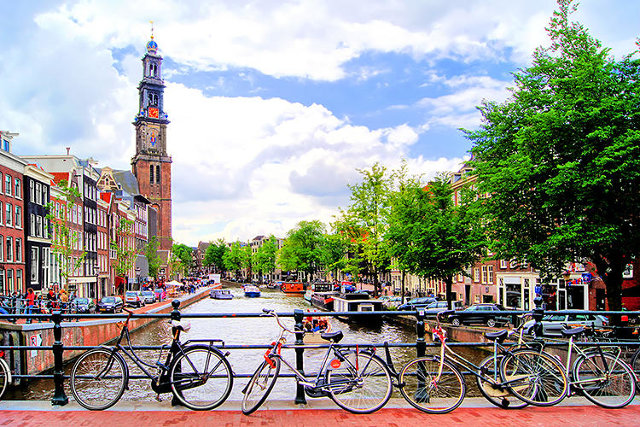
Like Copenhagen the cycling rates here are off the charts. In fact,
Amsterdam may be the only city in the world that has more problems with
pedestrian and cycling traffic congestion than vehicle congestion. 67%
of all trips are done by cycling or walking. In fact, on a daily basis
there are 10,000 bikes parked anywhere a space can be found adjacent to
the central train station.
But Amsterdam is much more than just bikes. In fact, in speaking with
the founder of this first bikesharing project in the world, which occurred in Amsterdam decades ago, Luud Schimmelpennick, showed me videos of their first experiment in electric vehicle sharing in the early 1990s.
In recent years, Amsterdam has stepped up its pace to be a leading
smart city. Amsterdam Smart City is a public private partnership focused
on using the city as an urban laboratory for the use of open data, new
mobility solutions and ultimately improved quality of life for all
residents and visitors. The collaboration has already supported more
than 40 smart city projects ranging from smart parking to the
development of home energy storage for integration with a smart grid.
Vienna has long been known as having a very high quality of life, but
it is a city that hasn’t rested on its quality reputation. Vienna has a
sizable range of smart cities activities and a planning department, led
by Thomas Madreiter, that gets it.
In fact Vienna recently created a public private entity, TINA Vienna
which is tasked with co-developing smart city strategies and solutions
for the city. They gave me a document which summarizes more than 100
smart cities projects being developed throughout the city. One cool
project is the so-called “Citizen Solar Power Plant."
With a goal of obtaining 50% of their energy from renewables by 2030,
the city partnered with the local energy provider, Wien Energy, they
developed a crowd-funding model whereby individual citizens can buy half
or whole panels and receive a guaranteed return of 3.1% annually.
Vienna is also testing out a range of electric mobility solutions
from expanding their charging network from 103 to 440 stations by 2015
to testing EV carsharing and electric bike rentals. Another important
innovation has been in rezoning dense neighborhoods allowing for
zero-parking residential buildings. Residents in these communities
commit to not owning a personal vehicle.
Finally, Vienna is renovating a 40 hectare former slaughterhouse
district and turning it into a much smarter use: an innovation district
focused on media science and technology. By 2016, the city expects
15,000 people to working on startups in the Neu Marx Quarter district.
Barcelona is a cosmopolitan city known for its sun, architecture, and
lively streets. Yet, Barcelona has been building a rather impressive
portfolio of smart city initiatives over recent years. The city has
taken a unique position of not only advancing its own initiatives, but
trying to provide support for the global smart cities movement. This has
been manifested in a few key initiatives. One, Barcelona holds the
premier global event for smart cities stakeholders, the Smart Cities
Expo World Congress. Pilar Conesa, the city’s former chief technology
officer, is the director of the congress, and with her support,
Barcelona has actually expanded this initiative to other parts of the
world. This year, they co-hosted a smart cities expo in Bogota to serve
the Latin American region. Barcelona is the driver behind the City
Protocol initiative which seeks to connect global cities in pilot
projects to address common challenges.
But for those living in Barcelona (or visiting) there is a lot going
on in this space. Barcelona was an early player in testing e-mobility.
They have an excellent bike-sharing project with more than 6,000 bikes,
although last I visited, only residents could use them. Barcelona has
also been testing all kinds of sensors on everything from noise and air
contamination to traffic congestion and even waste management.
Barcelona’s 22@ innovation district is also an impressive mix of smart
urban planning and entrepreneurial innovation. This sector of the city
has been transformed into an innovation home attracting local and
international entrepreneurs to set up shop. The district has been so
successful that it has inspired cities like Boston and Buenos Aires to
follow suit. With all of their innovations and strong quality of life,
perhaps it is no surprise that the life expectancy in Barcelona is among
the highest of cities I have studied (83 years).
Paris, most known for its fantastic museums and of course the Eiffel
Tower, Paris has become a pioneer in the smart cities arena. Their most
impressive initiatives have been in their complete embrace of shared
mobility. Paris has led the world in their expansive and widely used
bikesharing network, Vélib'. Currently, the system has more than 20,000
bikes and 1,800 bikes throughout the city. Evidence suggests that Velib
has led to a 5% reduction in vehicle congestion in the city. Not to be
outdone, the city partnered with Bolloré to create one of the world’s
first and most expansive EV carsharing programs. Launched in 2011,
Autolib will soon have 3,000 EVs in its carsharing fleet.
Paris has also managed to foster a thriving entrepreneurial
ecosystem. The Startup Genome project recently measured city-based
entrepreneurial ecosystems around the globe, taking into account
variables such as access to capital, volume of startups each year and
innovations generated. Paris’ ecosystem was rated 11th best in the
world.
Stockholm has a deservedly green reputation. In fact, about 40% of
its land mass is dedicated to green space. Stockholm was rated #2 in
Siemens Green City Index. In 2010, Stockholm was the first city to be
awarded the EU Green Capital status. Stockholm residents are also
amongst the highest per capita users of the Stockholm Metro system. Like
its Scandinavian peer, Copenhagen, Stockholm also aspires to become
carbon neutral, by 2050 instead of 2025. Due to congestion management
including urban tolling and pollution controls, Stockholm is the only
global city to meet stringent the World Health Organization’s
recommended air contaminant standards. Stockholm also can boast about
its 800 kilometers of cycling paths.
It’s not all about being green. Stockholm has also received top marks
for its commitment to digital governance. Out of 100 global capitals
surveyed by Rutgers University, Stockholm was rated 7th and scored 1st
amongst cities for its commitment to data privacy and security for
citizens. The Stockholm Royal Seaside (SRS) urban regeneration project
has also become a test bed for new information and communication
technologies (ICTs) designed to improve the quality of life, grow the
local economy and help Stockholm remain a green leader in the region.
Not surprisingly, London earned first place in the smart economy
category. It has long been considered the financial capital of Europe,
but it has also emerged as a leader in entrepreneurship. The Startup
Genome project rated London the 7th best entrepreneurial ecosystem,
number one in Europe.
Of course London made waves with its congestion zone which generates
additional income for the city while reducing traffic in the urban core.
London also took strategic use of the Olympics (like Vancouver before
them) to help make the city greener while also focusing on economic
development. London’s Royal Docks emerged from the Olympics planning as a
regenerated, sustainable commercial and residential area. This area is
already home to one of the greenest and smartest buildings in Europe,
the Crystal, built by Siemens to showcase smart city technologies.
Hamburg is the second largest city in Germany and the first of two to
make the top 10 ranking this year. Like a few others on this list,
Hamburg also was awarded the European Green Capital designation in 2011.
Hamburg also offers a high standard of living having been ranked 17th
globally by Mercer in 2012 and eighth globally by Numbeo.
In recent years, Hamburg has embarked on widescale transformation. At
157 hectares, HafenCity (Harbor City) is Europe’s largest urban
regeneration project. When completed in 2025, this roughly $14 billion
project will house a university, a port, and lots of mixed-use
residential and commercial development connected with excellent, green
transit.
Berlin has a lot going for it as well. A concept closely tied to
smart cities is the creative class work led by famed researcher Richard
Florida. The evidence suggests that successful cities of the future will
be those that are able to attract and retain the creative class who
will lead urban renewal and economic growth through innovation and
entrepreneurship and by supporting a vibrant cultural scene. Berlin has
that in spades.
Enrique Moretti said it better than I can, in his recent book, The
New Geography of Jobs: “Berlin’s well-established progressive attitudes,
gritty but interesting architecture, and tormented history inspire a
feeling of experimentation ... two zoos, three major opera houses, seven
symphony orchestras, and scores of museums ... Walking along the
beautiful streets of the historic downtown, you cannot escape the
impression that this unique mix of creativity and high quality of life
is hard to surpass ...”
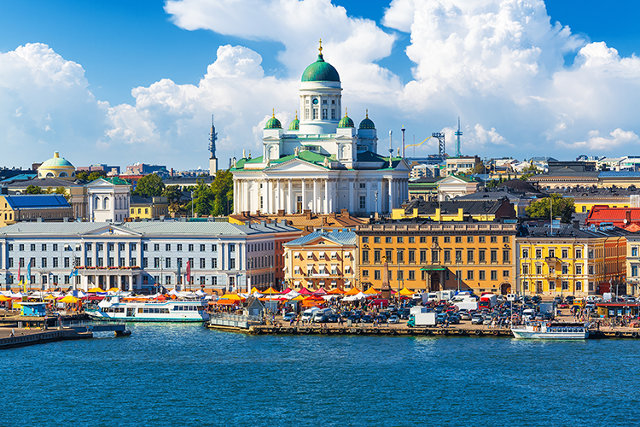
Helsinki barely edged out Oslo for the 10th and final spot in this
year’s rankings. Helsinki really shines in the Smart Government arena.
They have more than 1,000 open datasets and have been actively promoting
engagement with developers through hackathons. They also played host to
the first global Open Knowledge Festival in 2012. Berlin by the way is
the host in 2014. Helsinki also launched their Forum Virium Smart City
Project to provide ubiquitous data to their citizens in hopes of
improving quality of life.
Oslo, Brussels, and Frankfurt earned honorable mention for 2013.
Companies
providing various technologies they see the opportunities that are
created from the Internet of Things ( IoT ) . " There is a potential market that is growing at a rate of 30 % per
year and is estimated to reach 6 billion euros in 2015," said Fabian
Valverde , director of SAP's mobility during the 2013 FUTURECOM panel. What is SAP sees also glimpsed by companies such as Ericsson , Cisco , Qualcomm , among others . Everyone wants to grab a slice - still incipient - Business IoT . Oren
Pinsky , Qualcomm , emphasizes the connection machine to machine will
be within almost all business processes within the short to medium term.
" About 70 % of cars in 2017 will be connected in one way or another. " Observing
this scenario, Marcelo Ehalt , director of engineering at Cisco ,
explains that the IoT is the fourth wave of the internet . " The first wave was the web browser and e- mail , then e-commerce emerged . The third wave was the immersive Internet , with social networks , mobility , collaboration.
Infoundation of everything, the network
Onefact is certain:the Internet of Thingsdeeplyimpacts thearchitectureof telecommunications networks.As explained byJesperRhode,director of innovationat Ericsson,many deviceswill beconnected bywireless networks,but not necessarilyforcellular networks,even thoughthe lattermayalsoplay a key role,for example,sensorsstreet ortransportation,wherecableis expensivepass.
"In the future, networkswill have toconnectwireless devices withoutmobilityprofiles,ie,will not require areviewofBTSsin real time."AndEricssonis eyeing themarketthat formsfrom the adaptationof mobile networks-fixed.
For Cisco, the Internetof Everythings-IOE,as theproviderhas decided to appointthe concept-it also representsan opportunity to sellnetwork equipment."Connectivityisbasic principle," saysEhalt."You must usetechnologiesfor optimization andimprovement."
IfCiscoandEricssonlook tonetwork componentsthat will be affectedby the explosionof connected objectsfor theSAPof the big issuesis to enter themarketof toolsthat analyzethe hugeamount of datafrom theInternet of Things andturn them intoinformation.Andhow to make apredictiveanalysis togive companiestoolsso they takedecisionsin advance.Other opportunitiesalsoarise fromsegmentssuch as security,privacy andcontrolof the devices.
A
Internet das Coisas ainda está em fase inicial, mas seu potencial é
imenso. Em entrevista ao Convergência Digital, Kevin Ashton, que cunhou o
termo, fala sobre o papel das diversas tecnologias para alcançar a tão
sonhada conexão entre máquinas sem interferência humana. Ashton ficou
bastante conhecido pela sua defesa da tecnologia de identificação por
radiofrequência (RFID). “A Internet das Coisas tem o potencial de mudar o
mundo, assim como a Internet o fez. Talvez até mais”, pontuou.
Convergência Digital — O termo Internet das Coisas foi cunhado por você. Como se deu isto? Kevin Ashton — O
termo Internet das Coisas ganhou vida como título de uma apresentação
que fiz para a Procter & Gamble em 1999. O que eu quis dizer naquela
época, e que ainda digo, é o seguinte: hoje, computadores — e,
portanto, a Internet — são quase totalmente dependentes de seres humanos
para obter informações. Quase todos os cerca de 50 petabytes (um
petabyte equivale a 1024 terabytes) de dados disponíveis na Internet
foram capturados e criados por seres humanos, seja digitando, apertando
um botão de gravação, tirando uma foto digital ou digitalizando código
de barras. Diagramas convencionais da Internet incluem servidores e
roteadores e assim por diante, mas deixam de fora os mais numerosos e
importantes roteadores de todos os tempos: as pessoas. O problema é que
as pessoas têm tempo, atenção e precisão limitados em tudo, o que
significa que elas não são muito boas em captar dados sobre as coisas do
mundo real.
CD — O que isto quer dizer? Ashton — Isto é
de grande relevância. Nós somos físicos e assim também é o nosso
ambiente. Nossa economia, sociedade e sobrevivência não são baseadas em
ideias ou informações, mas sim em coisas. Você não pode comer bits
ou queimá-los para se aquecer ou transformá-los em seu tanque de
gasolina. Ideias e informações são importantes, mas as coisas importam
muito mais. No entanto, a tecnologia da informação de hoje é tão
dependente de dados originados por pessoas que os nossos computadores
sabem mais sobre ideias do que sobre coisas.
Se tivéssemos computadores que soubessem tudo o que haveria para
saber sobre as coisas, usando dados coletados, sem qualquer ajuda nossa,
seríamos capazes de monitorar e contar tudo, além de reduzir muito o
desperdício, a perda e o custo. Assim, nós saberíamos quando as coisas
precisariam de substituição, reparo ou tivessem recall. E ainda saberíamos quando as frutas estariam frescas ou passadas.
Precisamos capacitar os computadores com os seus próprios meios de
capturar informação para que eles possam ver, ouvir e sentir o mundo por
si mesmos, em toda a sua glória aleatória. A [identificação por radiofrequência]
RFID e tecnologias de sensor permitem que os computadores observem,
identifiquem e compreendam o mundo, sem as limitações dos dados
inseridos por humanos.
CD — Há bastante tempo você fala sobre sensores que ligam tudo. O que mudou desde que começou a levantar a questão? Ashton — Em dez
anos, fizemos um grande progresso, mas a comunidade RFID precisa
entender o que é tão importante sobre o que a nossa tecnologia faz, e
manter-se advogando para ela. A Internet das Coisas tem o potencial de
mudar o mundo, assim como a Internet o fez. Talvez até mais.
CD — Você
sempre focou muito em RFID, mas agora, quando falamos de Internet das
Coisas, aborda-se mais a conexão por chips de celular. O que aconteceu? Ashton — RFID
(que contém um chip) é um caminho para os computadores perceberem
identidade. Isto é essencial antes mesmo de outros tipos de sensores
(por exemplo, de temperatura) que são realmente úteis. Como já se
resolveu o problema de identidade, temos sido capazes de avançar para
outros tipos de sensores.
CD — Como a Internet das Coisas vai evoluir? Ashton — É difícil prever, mas esperamos mais sensores, mais ubiquidade e mais e mais dados. E mais consequências inesperadas.
CD — Em que estágio de adoção de IoT estamos? Ashton —
Estamos apenas começando. Nós ainda temos muito que aprender. Minhas
previsões são sempre erradas; e há muita coisa que não sabemos. É um
grande sistema e vai levar um longo tempo ainda. Eu prevejo que vai
demorar mais do que esperamos.
CD — Quais indústrias estão na frente, liderando este movimento? Ashton — A
indústria automotiva é uma delas, e o varejo é outra. A primeira
beneficia-se da rápida identificação em estradas e dos sistemas de
sensores em veículos. Já os varejistas estão fazendo o gerenciamento da
cadeia de abastecimento, que tem escala e complexidade sem precedentes. E
fazer a captura de dados de forma automatizada dá a eles uma eficiência
essencial.
CD — Como
você avalia os fornecedores de TI preparando-se para prover soluções
para IoT? Qual é o impacto para as empresas de telecom? Ashton — Os vencedores serão provavelmente empresas das quais nunca ouvimos falar, as start-ups
que, provavelmente, vivem seus estágios iniciais hoje. É assim que
sempre acontece. Eu não sei o papel que as telcos irão desempenhar.
Existe o perigo de ser tarde demais. Quando você está fazendo bilhões de
dólares a partir de algo como telefonia, pode ser difícil ficar animado
sobre fazer milhões de algo como a Internet das Coisas. Então, um dia,
IoT valerá bilhões, e pode ser que elas tenham perdido a oportunidade. A
indústria de tecnologia geralmente “troca sua pele” a cada vez que há
uma grande mudança como esta.
InNovember, accordingto Anatel, the assetsofM2Mterminalswere8,175,309million,a significant increaseover2013.And the marketis mobilized.InBrazil,mergersand acquisitionsare a reality.TheWyless,multinationalcompany, bought65% stake inBrazilianTMYear,M2Mpioneer inthe country,with the investment ofapproximately $ 7million,reversedin infrastructure,humanresourcesand technology.
There are13 years inthismarket, theTMDataoperatesa managed networkthat connectsthe fourmobile operatorsinBrazil, Claro,OI,TIMand Vivocustomers.Operates throughvarious businesssectorssuch as automotive,infrastructure,security, medicalandfinancialservices.According tothe CEO ofTMData,SérgioSouza, companiesare accustomedwith theservice provideddirectlyby operators.With thatsufferthe lack ofan offerthat suitsthe logisticaldemands,technicalcustomizations,differentiated service,specialbusiness plans,advanced management, incentive andinnovation.
RenamedWylessTMDateBrazil,the company hasbold plansand wantsof the country,expand its presencein LatinAmerica."Alternativesaleschannelsspread all overthe countrywill be available, plus newoptionsfor financingequipmentto meetthe hugeexisting demand," saysthe CEO ofTMData.
Theinvestment will bethefirst majordeployment ofPorthossystem, themost advancedmanagement platformand awardedworldwide,able toensure thecontinuity andmanagement ofM2Msolutions.The investments plannedfor 2014are around$ 1.5 millioninretention andtrainingof newtalentsandstill projectsthe openingof new officesin LatinAmerica andRio de Janeiro."Brazilisone of the largestgrowth opportunities inM2Min relationto the world market,and one of thegreatest challenges ofthe BRICgroup." ConcludesDanMcDuffie,CEO ofWyless.
By publicizingthe annualreportforecastssafety-"MixingBarriers:ForecastTrend Micro securityfor 2014onwards"-the company'sinformation securityindicates thata largedata breachwilloccur each monthandadvanced attacksofbankingon mobile devices andtargeted attackshaveaccelerated pace.Threatstocriticalinfrastructureandsecurity challengesderived from theInternet of Things andtheDeepWebare alsohighlights.
The forecastsfor 2014in the areaof Information Securityalso highlight:
Malicious applicationsand high riskfor Androidwill reach3million;
Bankingthrough mobiledevices will becompromisedby increasedattacksviaan intermediary, makingverificationinadequatein twosteps;
Cybercriminalsincreasinglyusemethodsof targeted attacks,such asthe research ofopen sourceandhighly personalizedspearphishing;
Mobile devicesareincreasinglytargetedbyadvanced threats,includingclickjackingand"watering hole"attacks;
Lack of support forpopularsoftware such asJava 6and WindowsXPwill exposemillions ofPCsto attack;
Thepublic trust,compromisedby the revelationsmonitoringorderedby the United Stateswill resultin a variety ofefforts to restoreprivacy;
TheDeepWebwill continue to explorethe lack ofcapacityoflawenforcementto deal withthe spreadofcybercrime.
The report alsofocuseson the riseof the Internet ofThings,which promises to bethe notoriouswatershedrelated to personaltechnology.With increasedbeing deliveredbyutilitarianand usabletechnology aswatches andsunglasses,the possibility ofcyber crimeon a large scalederivingfrom identity theft,reality isa very real possibilityas technologycontinuesits proliferation.
A
wide network created from the connection objects that contain embedded
that make them able to communicate and interact with each other without
human interference technologies - - can be applied to various industries
Internet of Things concept . Vary , however , the goal of each and pace of adoption. To
Elia San Miguel , principal research analyst at Gartner , there are
areas where it is easier to drive the growth of the Internet of Things ,
such as m -health , storage ( warehouse ) , logistics and
transportation , primarily in the communications vehicle to vehicle. " These are areas that are more mature and that , within our circle
hype , are more advanced ," he said in an interview with Digital
Convergence . Jesper
Rhode , director of innovation at Ericsson, ranks among the areas that
are flagships for the Internet of Things boost the energy sector , the
financial system , automating supermarket ( self-service , where goods
and people register online payment) traffic management and the health sector , which has devoted considerable investments to this. Elia
cites applications ranging from flags wave ( that green or red signal )
communicating with the GPS to direct where the car is parked in a mall
to fleet control and warehouse management .
"We thinkthere will beplentyon the Internetof Thingsin lessthan two years,exceptin the health sector.Within twoto five years,we willstart seeingmore of the conditionsof adoption andimplementation, "saidElia.Health,with an agingpopulation, it makes moresense forthe government coffersmonitor the patientfora preventivetreatmenttoafford highercosts later.
For the next fiveyears, theanalyst expectsgreater adoptionby theenergy companies,deployingsmart grid solutions.At present,the bottleneck isin discussions onthe regulatory framework,business modelandecosystem."The timingdepends onthe whole system,whowill pay,howwill workbox.These are issues thatstill need to bedefined, "saysElia.
Rhodebelievesthe business modelin the area ofutilitiesis alreadybeginning to materialize."There were doubtsabout whowould fundit.Whatis happening is thatenergy companiesare offeringcheaper ratesdepending on the time,but the consumerhas tobuy the devicethat makesthis measurement.It is an investmentthat pays for itselfwiththe economy, "he says.
Besides these,thereare great expectationsfor the segmentof housingwithin theconcept ofsmart homes,withwidespread adoption ofautomation solutionsforhomesandso-calledsmart cities.
"We dealas amanagement platformchips,butour strategygoes beyond.We have apilotfleet managementand a platform forutilities, "saidEduardoTadeuTakeshiOhmachi,TelefonicaVivointhe lastFUTURECOMpanel.
"The areas thatwillfurther advancethis timeare thosewith the greatest financialreturn toconnect the devices," pondersRhode.Some exampleshe mentionsthe monitoring and controlof energy withsmart gridandconsumption pointscontrolledby theinternet.